
Two thousand years ago, crowds gathered in the Colosseum to watch human beings and animals fight, suffer, and die in front of massive cheering crowds.
The most powerful people in society sat closest to the violence. Senators. Nobility. Political leaders. Public spectacle was woven directly into the political and social life of the culture.
And children grew up inside that world.
They learned what power looked like. What strength looked like. What earned status. What people celebrated together.
Dominance. Humiliation. Fear. Spectacle. Violence.
What a society turns into entertainment shapes people over time.
It affects what feels normal. What feels exciting. What people admire. What people learn to tolerate.
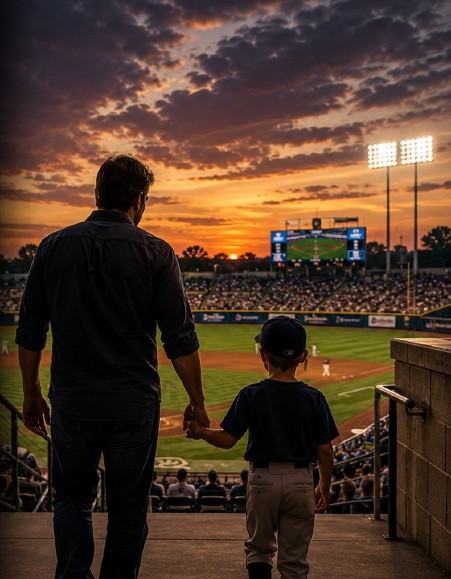
Today, tens of thousands of people still gather inside enormous stadiums.
Families sit together wearing team colours. Children imitate their favourite players. Entire cities become emotionally invested in moments of skill, discipline, teamwork, and hope.
Competition still exists. Winning and losing still matter.
But the emotional centre of the experience has changed.
A baseball stadium still contains rivalry, aggression, emotional intensity, and conflict.
People gather to watch human beings perform under pressure, cooperate, recover from failure, pursue excellence, and devote themselves to something they love.
A pitcher trying to hold steady with the game on the line. A shortstop diving to stop a ball. Teammates relying on each other in front of thousands of people.
Culture shapes nervous systems.
What people repeatedly surround themselves with affects what they learn to admire, imitate, tolerate, and aspire toward.
Cultures teach people what to admire, imitate, tolerate, and aspire toward.
And every generation helps decide what kind of emotional world children will grow up inside.