
For most of my career as a therapist, my work has been about empowerment. Helping people find their voice, trust their perceptions, set boundaries, and respond more skillfully to life.
Psychotherapy at its best involves helping people reclaim parts of themselves organized around fear, shame, helplessness, or chronic invalidation. I still believe deeply in that work.
But over the last five to ten years, I’ve become increasingly concerned about something I keep seeing clinically and culturally.
More and more, people seem to experience emotional reactions as proof of victimization. If I feel hurt, then you were hurtful. If I feel offended, then you were offensive. If I feel emotionally distressed, it’s because of you.
The focus increasingly shifts away from tolerating discomfort, reflecting on competing perspectives, or negotiating conflict, and toward identifying who caused the harm.
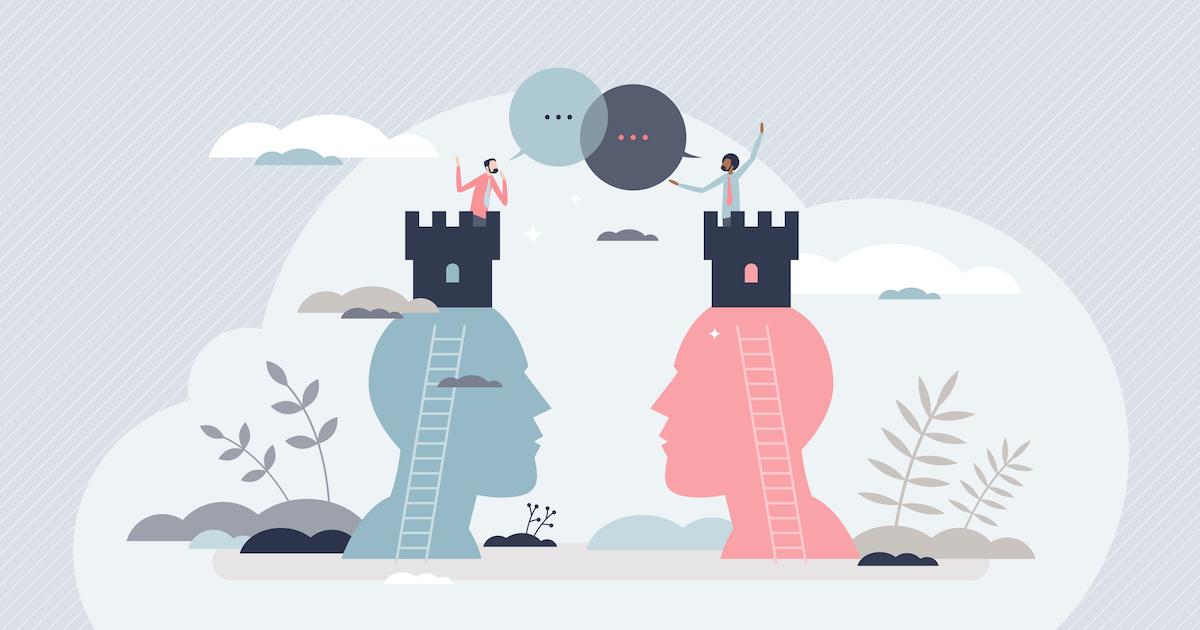
At the same time, technology has made it easier than ever for people to surround themselves almost entirely with others who reinforce their worldview, mirror their emotional reactions, and confirm their interpretation of events.
And when disagreement occurs, it has become commonplace to cut people off and retreat into emotionally safe communities.
Friendships end over disagreement. Family relationships collapse over political differences. People who challenge the group’s assumptions are increasingly pushed out, cut off, or treated as psychologically dangerous.
We seem to be losing our capacity to agree to disagree. Polarities are strengthening, not weakening.
What worries me is that emotional distress is increasingly being treated not as part of ordinary human conflict, growth, disagreement, or self-reflection, but as proof that someone else is the problem.
Feeling threatened is not the same as being unsafe. Feeling challenged is not the same as being attacked. Learning to distinguish between those experiences is part of psychological maturity.
Real empowerment does not mean becoming incapable of experiencing discomfort. Nor does it mean removing every person who creates emotional friction.
Real empowerment is the capacity to remain grounded while encountering disagreement, frustration, ambiguity, and difference.
It is the ability to stay connected to oneself without immediately collapsing into avoidance, contempt, moral certainty, or emotional withdrawal.
My entire life, I have been able to sit across from people whose beliefs I found deeply offensive and still remain capable of curiosity, compassion, and human recognition.
That does not mean agreement, approval, or abandoning moral judgment and healthy boundaries.
It means recognizing that reducing people entirely to the worst things they believe, say, or the group they belong to destroys the conditions necessary for dialogue, accountability, persuasion, and repair.
Because the ability to remain in relationship while navigating disagreement, anger, disappointment, and conflict is not weakness.
It is one of the foundations of civilized life.