The first time I heard about it, I thought the kid was joking.
He was living in a residential treatment program. Teenager. Smart. Not particularly disturbed in any obvious way. And he was laughing.
“You’ve got to see this,” he said. “It’s hilarious.”
The website was called Faces of Death.
He started describing it. Graphic car accidents. Dead bodies. Crime scenes. People who had died in ways that weren’t meant to be seen, let alone watched for entertainment.
He wanted to show me.
I said no immediately because my own reaction was one of disgust. I remember thinking, this isn’t something the brain should get used to.
That moment stayed with me, because it was the first time I had the clear sense that something had shifted. That the internet wasn’t just information or connection. It was access. Unfiltered, uncontained access to things human beings were never meant to consume casually.
Over the years, I’ve come to regret that moment.
I don’t think he was just trying to shock me. I think he was trying to show me something he didn’t know what to do with. And somewhere along the way, he had learned that the way you respond to it is to laugh.
I didn’t step into that. I shut it down.
And I’ve come to see that he may have needed help making sense of what he was seeing, not just someone to refuse it.
Over the next few years, I learned about many different things that concerned me.
One was a website where photos of teenagers were pulled from yearbooks. Labelled, ranked, mocked. Entire pages dedicated to how “ugly” they were. Not models. Not public figures. Kids.
I remember imagining what it would be like to discover that your high school photo had been turned into a public joke. That strangers were looking at you and laughing.
There was something deeply off about it.
And the examples kept coming.
Teenagers talking about videos they had seen. Not looking for them, just finding them. Circulating them. Sharing them. Graphic pornography. Extreme violence. Beheadings. People being killed. Images that, not that long ago, would have been nearly impossible for a young person to encounter.
Now they were passing from phone to phone. Often as a joke.
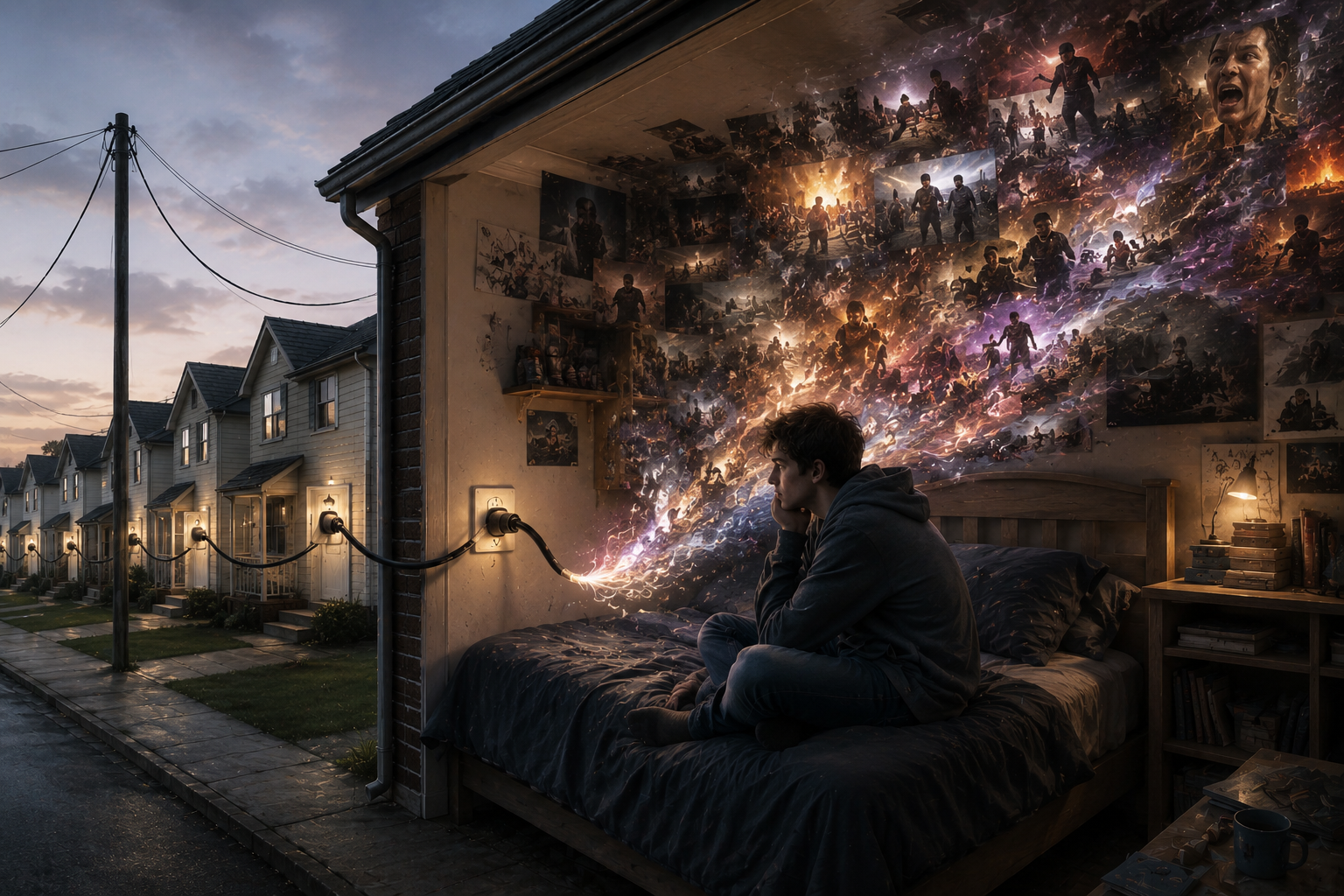
At some point, I started to have this image.
Like an electrical line running into every house. Only this wasn’t carrying power. It was carrying the full range of human experience, including the worst parts of it, directly into a child’s bedroom. No filter. No context. No adult there to help them process what they were seeing.
Just exposure.
And here’s the part that matters.
It’s not that every exposure is traumatic. But repeated, unprocessed exposure to extreme material does something. The nervous system doesn’t just “watch” these things. It responds. It encodes. It adapts.
No narrative. No meaning. No containment.
Just impact.
So yes, something has changed.
We’ve created a world where children can access anything, at any time, in complete isolation. There is no filter, no pacing, no adult presence to help make sense of what they’re seeing. Just repeated, uncontained exposure.
And that exposure is not neutral. The nervous system responds to it, adapts to it, organizes around it. What was once shocking no longer registers in the same way. More intensity is needed to produce the same reaction. The threshold shifts.
Over time, that matters.
We are not just giving kids access to the world. We are giving them access to the most extreme parts of it, without context, without protection, and without any real understanding of what repeated exposure actually does.
And then we leave them alone with it.
We are raising a generation of traumatized kids.