Human beings need to belong.
We are born dependent. Our brains and nervous systems take years to develop. We survive because someone holds us, feeds us, protects us, responds to us, and brings us into a family, a community, a language, a culture, and a world.
We bond, attach, and organize ourselves around family, friendship, neighbourhood, religion, nation, culture, identity, and shared meaning. That is why belonging is so powerful.
It is also why belonging can become so dangerous.
The problem with belonging begins when it costs you your freedom to feel, think, love, question, or remain true to yourself. To belong here, you have to see things our way. To be close to us, you have to distrust them. To be safe with us, you have to become suspicious of anyone outside the group.
In its most extreme form, the price of belonging becomes hatred. I have seen this most clearly in families.
Two people fall in love, or believe they have fallen in love, and decide to build a life together. They get married. They have a child. At the beginning, the child belongs to both of them, and both parents belong to the same family.
When the marriage breaks down, the family splits in two. The child began in one family, under one roof, where belonging to one parent did not have to threaten belonging to the other. Now the child has to move between two homes, two emotional worlds, and two separate claims on where they belong.
Many divorced parents protect the child’s belonging with care. In more painful families, that becomes harder to hold. The child may begin to feel that closeness with one parent creates pain, anger, or withdrawal in the other.
In extreme cases, this can become parental alienation. The child’s relationship with one parent is slowly pulled into the emotional world of the other. The child may begin to fear, reject, or refuse contact with a parent they once loved. By then, the child’s need to belong has become part of a conflict they were never supposed to carry.
In that position, the cost becomes concrete. Affection for the other parent becomes harder to show. Good memories become harder to trust. One belonging is protected by weakening the other.
This is the belonging pressure. The child is dependent. The child needs attachment, safety, approval, and emotional security. If one relationship begins to feel safer, stronger, more necessary, or more fragile, the child may move closer to that parent. The damage happens when one parent’s need for closeness carries an implicit demand that the child pull away from the other parent.
I have worked with families where this pressure has caused profound damage. The work often means containing resentment, blame, accusation, contempt, fear, and hurt long enough to reach what is underneath: helplessness, sadness, vulnerability, grief, and the possibility of repair. A young person may reach seventeen or eighteen and begin to understand that parts of their own mind were shaped by a conflict they were too young to understand. They may feel shame for what they believed, grief for the relationship they lost, and confusion about how much of their own heart had to be pushed away in order to stay connected to the parent they felt they could not afford to lose.
This is not only a family problem. It is a human problem.
Groups can offer safety, identity, language, purpose, and meaning. They can give people a place to stand when they feel lost, isolated, humiliated, or afraid. That kind of belonging can be lifesaving.
The danger comes when belonging requires an enemy.
Sometimes the group says, directly or indirectly: you belong with us because we know who hurt you. We know who threatens you. We know who has taken from you. We know who you must fear. And finally, we know who you must hate.
Hatred is a primitive form of belonging. It bonds people by giving them a shared enemy. It helps people make sense of pain by giving them someone to blame. People who feel lost can suddenly know who they are because they know who they are against.
That is what makes hatred so dangerous. It can feel like clarity while narrowing the mind. It can feel like moral strength while making cruelty feel justified.
I have always struggled to understand hatred.
I understand anger, betrayal, resentment, fear, and the need for accountability. I have worked with people who have done terrible things, people many others would find easy to hate, and people some communities organize themselves against. But hatred itself has never made sense to me as a way to understand another human being. When I was younger, I worked in a residential treatment program with a young person I found very hard to like. That troubled me. I believed that if those feelings were coming up in me, they were mine to understand. I did not want my dislike to become the truth about him or a barrier to care. So I moved toward the relationship. I worked harder with him. I tried to understand him more deeply. Eventually, compassion became possible. Some people trigger fear, anger, or disgust in us. Some people do things that are cruel, dangerous, damaging, and deeply hurtful. Those reactions may be real, but they are not the whole truth about another human being. The task is to keep enough of the person in view that hatred does not become the organizing principle.
This is why seeing both sides has become so difficult. Belonging often comes with an emotional demand: condemn who we condemn, fear who we fear, hate who we hate.
To refuse that demand is not the same as saying all sides are equal, harm does not matter, or accountability should disappear. It means the mind is still trying to hold complexity when the group wants certainty. I think about this in relation to my own life.
One of my earliest memories of belonging and exclusion was from school. Each morning, they played the national anthem and then the Lord’s Prayer. Because I was not Christian, I was expected to stand for the anthem and sit for the prayer. I was one of only a handful of kids in the class who had to sit.
The message I took from that was simple: you are here, but you do not fully belong here. You are part of the class, but you are also marked as different. At the same time, I did not feel any sense of belonging inside the minority identity being assigned to me. From early on, I rejected many of the beliefs, customs, and values I was being told were mine.
Because I never felt a secure belonging inside any one group, the boundary between my people and not my people never became the centre of how I related to others. At seventeen, I started volunteering with at-risk kids in the Jane and Finch corridor. That brought me into a community shaped by poverty, racialized experience, and social conditions profoundly different from my middle-class upbringing in North York.
I have spent much of my life on the front lines of mental health, working with people whose backgrounds, cultures, religions, racial identities, communities, and values were often profoundly different from my own. We had very little in common except our humanity. And yet I cared deeply about them.
That became central to how I understood the work. Belonging cannot remain trapped inside sameness. Connection does not require shared tribe, shared religion, shared culture, shared class, or shared politics. It requires the capacity to recognize life in another person.
I belong to life.
That may sound simple, but it is the closest I can come to naming the position I have tried to live from. I do not want my care limited to people who resemble me, agree with me, vote like me, worship like me, or carry the same inherited identity. I do not want belonging to require an enemy. This has become harder in the modern world.
Belonging used to be mostly place-based. People belonged to the family, neighbourhood, village, religious community, city, nation, or culture around them. Now people can find belonging almost anywhere.
A person who feels alienated from their immediate family, school, workplace, neighbourhood, or country can find a community online that gives them recognition, identity, language, and emotional confirmation. That can be lifesaving when someone is isolated. It can also become dangerous when online belonging forms around grievance, resentment, contempt, ideology, humiliation, or revenge.
It can also change what a person experiences as true. Belonging now often means inheriting a reality. A group does not only tell people who they are. It tells them what happened, who to trust, what to notice, what to dismiss, who is lying, who is dangerous, and what counts as evidence. That is especially disturbing for someone who has spent much of his life trying to see both sides. Increasingly, when I watch different communities argue, I do not always see two sides fighting over a shared reality. I see different realities with very little overlap.
I have become convinced that this is also damaging family life. Children no longer have to look around them for connection, status, belonging, or a sense of who they are. They can find those things elsewhere, often in groups their parents cannot see or understand.
Parents are fighting with children who are gaming with friends in other time zones. The parents see a child staying up until one or two in the morning, refusing to come to dinner, or disappearing into the bedroom. The child experiences something different. Their friends are online now. Their team is depending on them. They have a role. They are expected. They belong there.
So when the parent says, “Turn it off,” the child may hear, “Leave your people.”
The conflict becomes bigger than screen time. It becomes a fight over access to belonging.
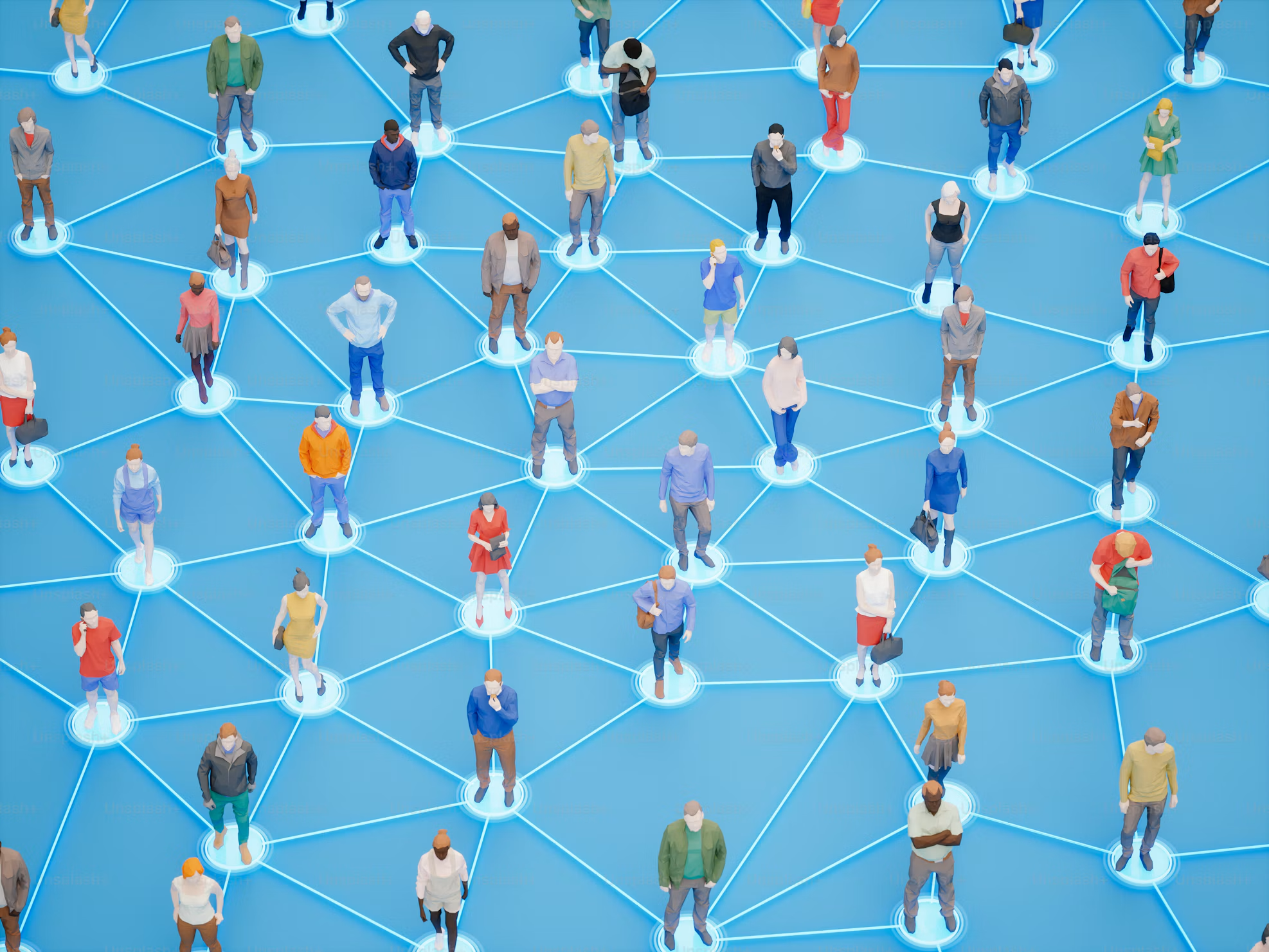
The device is no longer just a device. It is the doorway to the peer group. The headset, console, phone, or computer becomes the way the child enters the place where they feel known, needed, and expected. That is what technology has changed. A child can be physically upstairs while emotionally living in a group that exists across cities, countries, and time zones. A lonely adult can find a community built around grievance. A humiliated person can find people who turn that humiliation into identity. A frightened person can find others who name the same enemy. We are living with ancient belonging systems, modern technology, and global consequences. Our communities are no longer only local. Our conflicts, resentments, humiliations, and identities can now organize across the world in real time. Yet much of our psychology is still shaped by old survival logic. If your side wins, mine loses. If you gain power, I lose safety. If I believe you are going to take everything, I may prefer mutual destruction to submission.
That is the real danger. The old tribal logic has gone global. The problem with belonging is that it is one of the things that saved us, and it may become one of the things that destroys us.
The future depends on whether we can build forms of belonging that do not require hatred as proof of loyalty. We need belonging that can hold attachment without demanding blindness, identity without contempt, loyalty without cruelty, and difference without dehumanization. We need to belong more deeply than tribe.
We need to belong to life.